AI-focused bond issuers remain price-insensitive while post-2028 political uncertainty maintains an urgency to complete infrastructure investments. One thing that hasn’t oft been discussed as a contributor to higher yields is the direct relationship between project financials and tax-breaks.
The One Big Beautiful Bill Act allows businesses to take advantage of 100% bonus depreciation – deducting the total cost of qualifying capital equipment (such as power grids, machinery, and technology upgrades) in the first year instead of amortising over a longer period. Given the scale of investment in the US, this alone is enough to move the dial for bond yields.

Crude oil prices have also gained this week stoking inflation concerns and carrying bond yield momentum higher. There are a double-digit number of reasons why bond yields are heading higher, but to further fuel that dynamic Asian and Middle Eastern sovereign wealth funds are increasingly shifting allocations away from developed market debt in favour of direct equity stakes in their domestic AI, green-energy, and rare-earth processing infrastructure. We are in the midst of global industrialisation on a grand scale.

Oil prices are easing into the weekend with the US postponing Trump’s imminent strikes on Iran and as China prepared to resume refined fuel product exports, easing tighter parts of the distillate market including diesel. This reduces the threat of second-order inflation effects.
AI-related sectors remain robust while interest rate-sensitive sectors are cooling – that includes housebuilders, real-estate, utilities and automotives. In addition, high yield bond spreads are widening indicating that the crowding out effect is hitting the fringes of corporate debt markets too, adding financial strain to those companies.
This creates a stark, bifurcated economic divergence: asset-heavy and cash-rich segments surge upward on productivity and tech tailwinds, while leveraged, margin-thin sectors sink deeper under the deadweight of restrictive financing costs.
Liquidity conditions may continue to tighten at a time that proceeds a big push by the financial industry for retail investors to increase their private credit exposure. It also provides a more difficult set up for the huge amount of corporate debt, c. $4.3 trillion, that will be refinanced at higher rates over the next five years.
If credit-spread widening stays localised to the absolute fringes of the bond market, it remains a healthy cleansing of over-leveraged business models. If not, liquidity conditions could begin to drag on economic growth.
It’s not all doom and gloom, Brazilian equities and the Brazilian Real surged on Monday following the first round of its presidential election in which challenger Flavio Bolsonaro unexpectedly led. The outcome was a strong signal for potential fiscal conservatism, lower state intervention, and pro-market economic reforms. In the words of Jim Cramer – “There’s always a bull market somewhere”.
Where are markets up to?
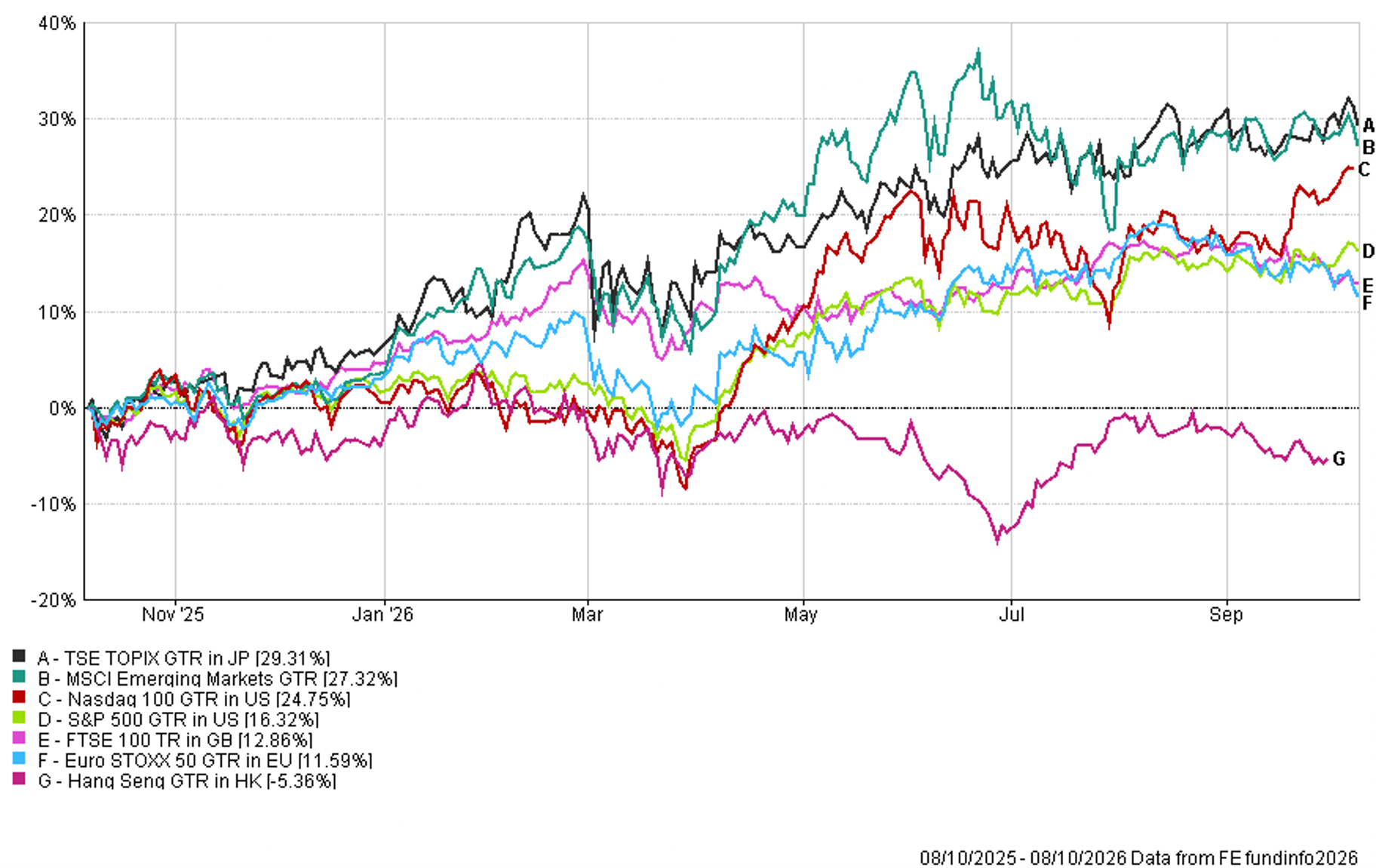
The rolling 12 month % cumulative returns in local currency from various indices is shown in the following chart:
Where are the portfolios up to?
The portfolio performance, net of fees, to close of business on Thursday is as follows:

As ever, if you would like to discuss any aspect of your portfolio, please do not hesitate to contact us on service@blythefinancial.com.