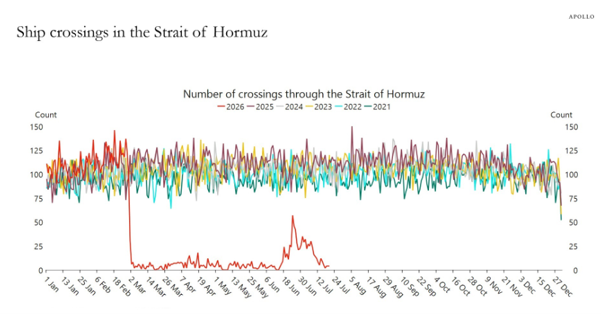
Houthi attacks in the Red Sea have been played down to curtail concerns of an expanding shipping chokepoint and for fear of rehashing the same ol’ story, I’ll only very briefly highlight the Hormuz situation – Transit has returned to lows:
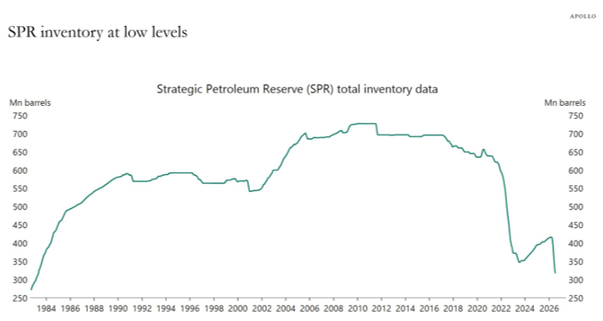
…and Strategic Petroleum Reserves are very low (albeit the axis scale hyperbolises it here):
Oil prices continue to climb, putting upward pressure on inflation expectations, pushing bond yields higher, and hampering the present value of future AI profits. The AI trade has come off the boil in recent weeks ahead of corporate results which are likely to provide little to get excited about.
Google’s results were key this week, offering bumper cloud revenue growth from an industry bellwether. Yet scepticism remained owing to aggressive capital expenditure and free-cash-flows that have finally turned negative. Free-cash-flow is a measure of profits that more accurately reflects true business operations. With these two metrics at cross-purposes, sentiment will be more inclined to ebb and flow along with other macroeconomic variables, such as inflation & bond yields.
The other concern for AI investors is the progress made by China, as the performance gap with the US appears to be shrinking. The Chinese lead in model efficiency and cost-per-unit intelligence, and there has been a notable shift in usage from US models to (Alibaba-backed) Moonshot’s Kimi 3 model which was released last week.
While this does not diminish the need for US-owned hardware, it allows early-stage AI investors to utilise cheap Chinese tokens in the development phase further pressuring mega-cap tech’s near-term free-cash-flow metrics.
The only positive takeaway for investors in US assets is that the dollar is holding up as yields remain higher for longer.
President Trump’s Section 122 Temporary Emergency Surcharge, the prevailing regulatory context for his 10% global tariff, expired and was replaced by Section 301 Forced Labour tariffs which are also 10% but are scaled to 12.5% for economies that lack established forced-labour import bans (or reciprocal enforcement agreements).
There is likely to be greater pushback from trading partners under this framework, but because there is no statutory limit, and with the World Trade Organisation’s appeals process crippled and slow, an international ruling could take years to materialise.
Trump has also targeted Canada specifically by imposing 50% tariffs on c. $20bn of goods, utilising a rarely used provision that allows the US to impose tariffs if a foreign government is deemed to discriminate against or disadvantage US commerce compared to other nations.
As we reach the weekend, Trump has also warned he is close to making a decision on a “massive attack” against Iran which would target critical infrastructure (rather than solely military assets) and exceed the scale of earlier offensive phases.
While escalation could improve the sentiment towards transit variables in the Strait of Hormuz and ease short-term oil price concerns, the shift towards striking economic infrastructure could diminish Iranian oil production and curtail the aggregate crude oil supply-side dynamic thereby tightening longer-term expectations.
One thing that’s more certain is the world’s growing hunger for electricity:
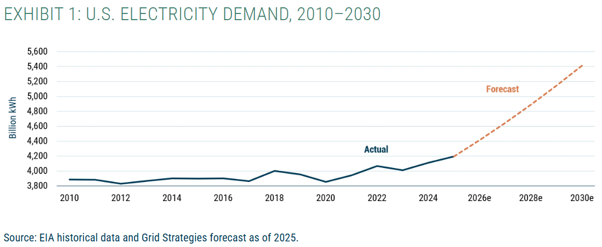
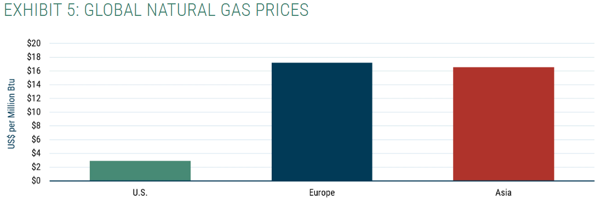
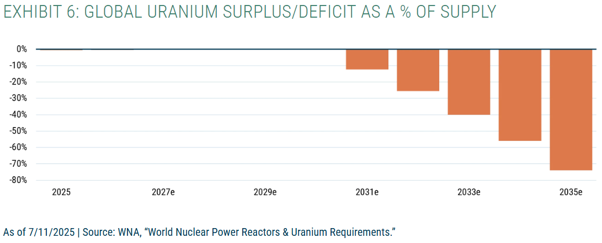
…and while a shift to natural gas works in capex justifications under current conditions, an expanding export capacity for LNG, to take advantage of substantially higher global natural gas prices (illustrated below), could combine with emerging demand growth that may significantly outpace the deliverable market supply to create a notable deficit just a few years out.
This will revitalise the story behind nuclear power as project deployment horizons contract, but for now the nuclear sector fades with AI sentiment.
Next week we look forward to more mega-cap tech earnings and an interest rate decision from the Bank of Japan – Hold onto your seats!
Where are markets up to?
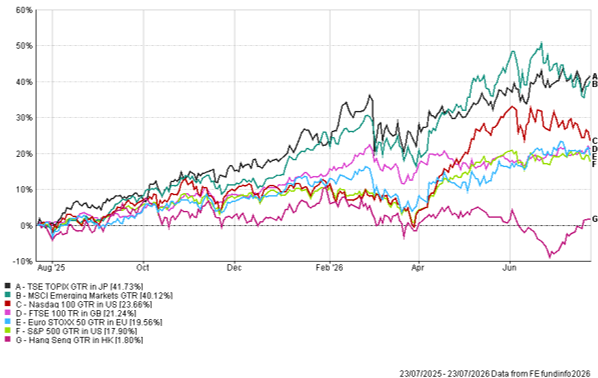
The rolling 12 month % cumulative returns in local currency from various indices is shown in the following chart:
Where are the portfolios up to?
The portfolio performance, net of fees, to close of business on Thursday is as follows:

As ever, if you would like to discuss any aspect of your portfolio, please do not hesitate to contact us on service@blythefinancial.com.