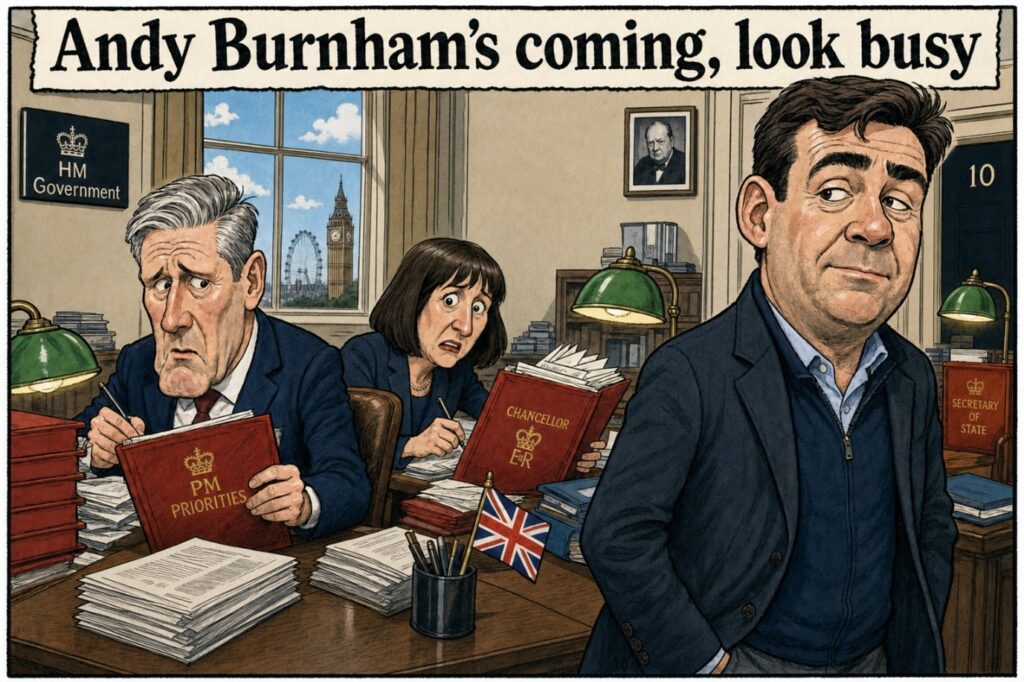
Lacking credibility and with rock-bottom approval ratings, it’s maybe no surprise that the Labour government has decided this week to make it look like they are doing something. Quick, Burnham is coming, look busy!
On Monday, Chancellor Rachel Reeves officially launched a sweeping overhaul of the UK’s bank ring-fencing regime allowing high street banks to use up to 10% of their assets for higher-risk corporate lending and state-backed infrastructure projects.
While this type of deregulation would otherwise be applauded, in this case it screams of scrambling to source capital from anywhere possible, having been fiscally hamstrung since arriving in office, and with local authorities already bled dry.
Unfortunately, having made banks the enemy and a possible target for further taxes, the policy may draw criticism from the Labour left and the public even if it includes the admittedly positive intention of improving financial sector efficiency by letting banks share costly back-office IT and compliance operations.
So, in an attempt to bring a little bit of joy back into the lives of the impoverished masses, the UK government is temporarily slashing VAT from 20% down to 5% on summer attractions including theme parks, fairs, zoos, museums, and numerous children’s activities including cinemas, theatres, concerts, meals in cafes and restaurants while ensuring free bus travel for children.
They also announced the suspension of import tariffs on over 100 everyday food items, with the proviso that the savings must be passed directly to consumers, extended the current 5p cut to fuel duty, and granted a 12-month road tax holiday for Heavy Goods Vehicles to save up to £912 per lorry and ease supply chain pressures.
This governing malarky as it turns out is relatively easy, one just demands prices to be lower, and everybody will be happier.
Unfortunately, it is not that simple, and no doubt come autumn there will be a renewed need to find money from somewhere with the purse already starting to feel the effects of the wealthy leaving.
It is also likely an attempt to pull the wool over the bond market’s eyes. Global bond yields have been rising this week as the Federal Reserve’s FOMC minutes pointed to rate hikes over cuts, as the Iran energy crisis continues to squeeze the supply of oil and gas, and as producer price indices come in hot, suggesting that there is more upward price pressure yet to hit consumer inflation data.
For the UK, this comes at a time when the term “moron premium” is coming back into circulation referring to the lack of political competence increasing the risk premium demanded by the market to lend money to the government. Fortunately, UK borrowing costs benefitted from Andy Burnham committing to maintaining Labour’s current conservative fiscal rules and protesting that he never implied that bond markets can just be ignored. Had this not been the case, we might just be back in a Liz Truss mini-budget crisis scenario again.
By focusing short term relief in areas of the economy that heavily feed into headline inflation data over the summer months, it appears that Labour’s true intentions are to artificially suppress prices, so the Bank of England has plenty of scope not to tighten monetary policy. So, any cheer is in parallel with some ulterior motive. Chin chin.
Alas, this could just be a short-term attempt to ease matters during the leadership change – Let’s hope this is not the hill they’ve chosen to die on.
While bond yields surge and energy crisis risk becomes more acute, there is an air of complacency in global equity markets which continue to perform well. However, they are well supported by industrial expansion of AI infrastructure which Nvidia’s results show no signs of slowing as Cap-ex plans continue to expand.

Global fund managers have spent the last month increasing equity weights significantly and capital has also been flowing back into US assets, which makes a lot of sense given they stand to benefit in relative terms the longer the crisis goes on.
As global equities often take the lead from the directionality of US equities – take today for example with Asian and European stocks rallying after a strong day in the US yesterday – there may be a reckoning for other markets should this crisis not come to a swift resolution. The US dollar for example is starting to exhibit strength again despite claims last year that the country’s exceptionalism was over.
Nvidia’s yet again exceptional results are perfect contrary evidence to that view; while achieving what appear to be supernormal profits, with gross margins of an unheard of 75%, the expectation was that these would rapidly subside as competitors filled the market with substitutes. This has simply not happened yet. The company committed to an additional $80 billion in share repurchases, ranking it among the largest capital returns in corporate history.

The same is expected of the memory chip market which has seen the incredible rise of Micron, Samsung and SK Hynix. Rapid supply expansion was expected to ease the market in 2027, but now Samsung believes the market will remain in deficit next year as the company managed to avert a worker strike.
As the energy crisis squeezes, currency volatility potential builds which will present itself in a strengthening US dollar until the pressure is released by a positive development. Until such an event the risk of stagflation increases and with it so does the relative appeal of commodities which have been performing well in 2026.
This trend has been met with a dose of economic reality this week as the harsh reality of an unresolved Strait of Hormuz blockade begins to bite on economic growth expectations. With the Chinese economy showing signs of weakness, the demand side of the equation starts to fall down, and commodity prices have begun to ease as a result. All this points to heightened volatility, but we enter the weekend with positive developments, apparently close to a peace deal. At the same time the EU seems to be reaching a trade deal with the US, so much of the geopolitical noise could be in the rear-view mirror by June.
Where are markets up to?
The rolling 12 month % cumulative returns in local currency from various indices is shown in the following chart:

Where are the portfolios up to?
The portfolio performance, net of fees, to close of business on Thursday is as follows:

As ever, if you would like to discuss any aspect of your portfolio, please do not hesitate to contact us on service@blythefinancial.com.