The EU is rolling out a €3 billion strategy to reduce reliance on China for rare earths and other critical materials with a focus mirroring that of the US, the building out domestic refining capacity and technology which is the bottleneck that has handed China its hold on these commodity markets. The plan includes possible export restrictions starting 2026, which may spur further trade antics in the year ahead.
Despite the tightest wheat inventories in a decade, which opens the soft commodity to increased price volatility should there be any disruptions to Ukrainian production, any price risk should not be of too much concern to the final consumer because grains, on the whole, are having record harvests in 2025.
Copper, on the other hand, is hitting record highs amid disruptions at various mines across the globe which has brought an anticipated supply shortage forward by 1-2 years. The structural decline in ore grades weighing on the supply-side and rising demand from AI data centres, grid expansion, electric vehicles and renewable infrastructure provide a strong tailwind.
The supply deficit, which is expected to exist through the medium term until more mining capacity can come online, is creating a powerful incentive for traders to establish heavy net-long positions, which will likely serve to drive additional price momentum.
Easing commodity prices have helped create room for central banks to ease monetary policy, so these supply-demand dynamics warrant close scrutiny.
Whilst inflation data has not demanded the attention it has previously garnered (given the significant reduction in the rate over the past 12 – 18 months) it remains an important factor, particularly when we look to what may happen to Central Bank policy rates in the near future.
It was therefore reassuring to see that the provisional Eurozone Inflation data came in showing that whilst the headline year-on-year rate had moved up slightly to +2.2%, the month-on-month data actually showed a deflationary number at -0.3%.
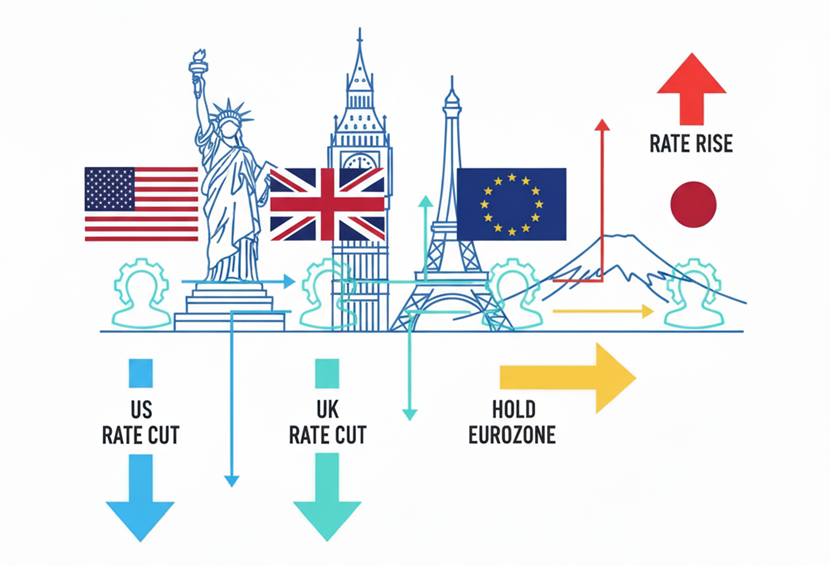
We have all of the major Central Bank monetary policy decisions coming over the next 2 weeks (US Federal Reserve next week, the Bank of England, European Central Bank and Bank of Japan the week after) and the consensus expectation for rate movements is as follows:
• US Federal Reserve Funds Futures show around an 80–90% implied probability of a 25 bp rate cut.
• European Central Bank – markets are pricing 95% –98% odds for a “no change” scenario
• Bank of England – money‑market pricing suggests that the BoE will deliver another 0.25% cut.
• Bank of Japan – is in a whole different sphere with inflation continuing to increase (after decades of deflation) and markets are pricing in an 80% chance of a rate increase.
With the final speech of the year from the Federal Reserve Chair often setting the tone for the year ahead, and in doing so tending to buoy equity markets, it will be most interesting to hear from Jerome Powell given this may be his last with the institution facing increasing interference from the government.
It is increasingly expected that President Trump will nominate Kevin Hassett as the next Fed chair who would be a lynchpin member of the committee inclined to cut interest rates. This is positive for risk assets but could weaken the dollar and stoke inflation, at a time when economist Torsten Slok proposes a reacceleration of the US economy could also stoke inflation in 2026. A slight steepening in Treasury yield curves reflect this change in market expectations. Expect inflation to be a hot topic in most forecasts for 2026.
To add fuel to that fire, the US looks forward to Trump’s “Largest Tax Refund Season Ever” which will provide an additional $91 billion in refunds compared to a typical year, with the average taxpayer receiving an extra $1,000 on their refund check. The largest relative benefits are expected to go to middle and upper-middle income households which should help approval ratings heading into the midterms.
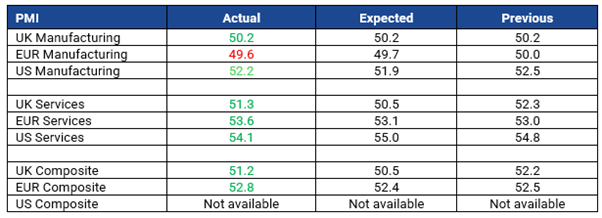
We had most PMI data updates this week (US composite data being the only notable absentee) and these were almost wholly positive. This leading indicator of sentiment is worth paying attention to, not for its precision, but because the trend provides a good overall feel for business sentiment now and into the immediate future.
As we have previously noted, a reading of below 50 indicates that the sector is in recessionary territory whilst a reading of 50 or over indicates expansionary territory. It is therefore reassuring to see that almost all current readings, with the exception of Eurozone manufacturing, are in the expansionary territory and further that almost all readings are better than expected:
Where are markets up to?
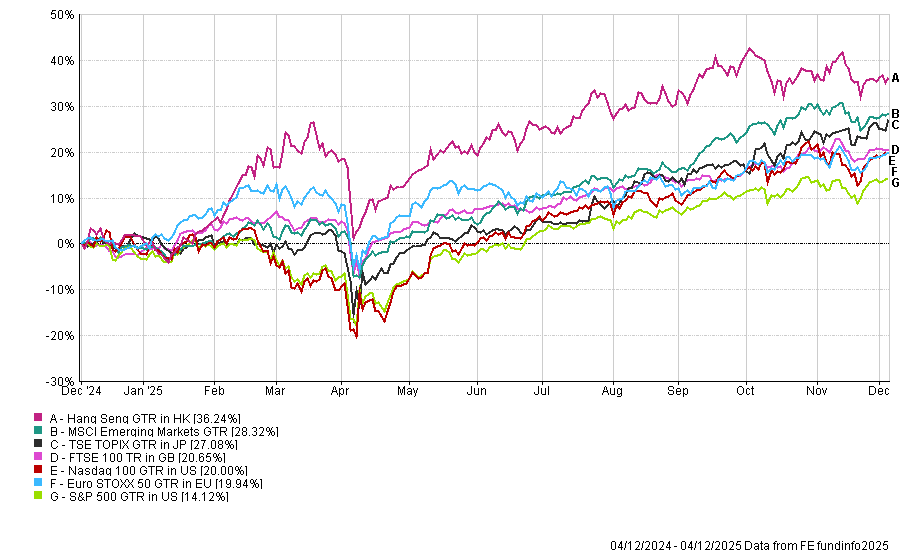
The rolling 12 month % cumulative returns in local currency from various indices is shown in the following chart:
 Where are the portfolios up to?
The portfolio performance, net of fees, to close of business on Thursday is as follows:

As ever, if you would like to discuss any aspect of your portfolio, please do not hesitate to contact us on service@blythefinancial.com.