Summit all up: Agentic AI is the Driving Force
The UK’s political issues rumble on this week, with a mounting challenge signalled by Wes Streeting’s resignation as Health Secretary while the King announced a legislative package of unexcitingly incremental policy developments that served to reinforce the view that Keir Starmer lacks oomph.
Josh Simons, the MP for Makerfield, announced he is standing down to trigger a by-election which opens the door for Greater Manchester Mayor Andy Burnham, who has confirmed he intends to return to Westminster.
At the same time, a major hurdle for Angela Rayner’s leadership bid was removed by HMRC which cleared her of any wrongdoing regarding her past tax affairs.
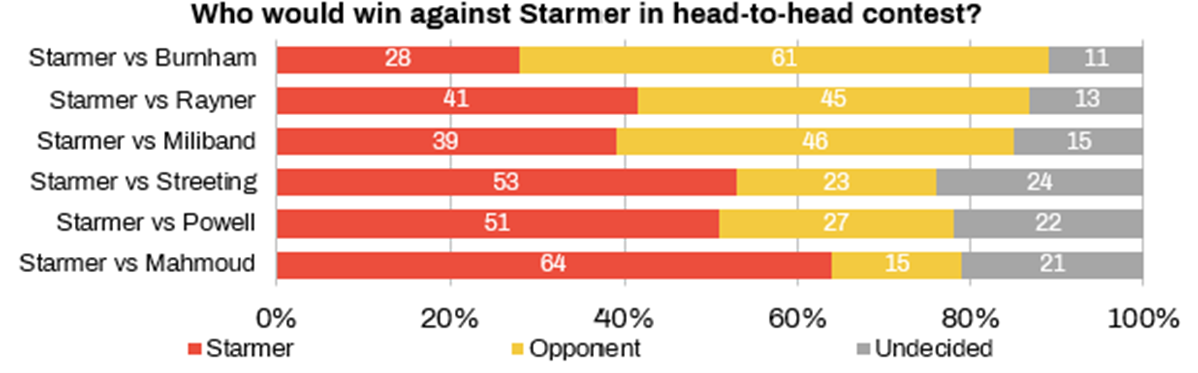
Early Labour party polling suggests that Streeting, who represents a more Blairite centrist, would struggle in a contest against the sitting Prime Minister, so he has neatly begun positioning himself as a second in command, powerhouse chancellor, giving Burnham his backing this morning.
With Burnham in the race, Ed Miliband and Rayner will likely wait in the wings, only opting to throw their hat in the ring should they be provided with an opportunity to offer an alternative to any emerging points of contention. It is otherwise looking like this is only going in one direction – Burnham for Prime Minister. We have covered what that means in our update on the 1st May. Sterling remains weak as ten-year Gilt yields rose above 5%.
The US dollar by contrast has been strengthening with interest rates expected to remain higher for longer as the global economy faces higher oil prices, even as Kevin Warsh is confirmed by the Senate as the new Federal Reserve Chairman. Fertiliser prices jumped significantly and that will put upward pressure on food prices from here.
While economists warn that the risk of US recession rises to 50% should crude oil remain at above $100 for two more months, the One Big Beautiful Bill tax refunds of c. $100bn begin hitting US bank accounts and AI investment continues to rise. An exceptional set of earnings from Cisco this week highlighted that AI investment was diffusing through the US economy and that there may be a wider array of beneficiaries.
This bodes well for the optimists as AI hardware producers charge on full speed ahead with venture capitalists, including the massive SoftBank, reporting that chip demand is being driven up by the pivot toward Agentic AI which uses six times more compute than standard large language models.
The German government’s €500bn infrastructure fund also begins its first major disbursements this week, but the region’s focus has so far been primarily on its defence spending as three quarters of EU member states now exceed the 2% threshold. The region now needs to focus attention to its energy and digital infrastructure issues.
Energy remains a major constraint and US innovators are increasingly sourcing AI tokens from China, where they are as much as six times cheaper to produce. This represents a hidden risk for AI exposed stocks as the rush to regulate this new digital trade deficit could have an unexpected impact on margins.
It’s looking ever more likely that the US will have to reengage militarily with Iran with normal formal breakthrough reached at the Trump-Xi summit, despite positive indications that China would exert its influence to reopen the Strait of Hormuz.
It presents a problem for equity markets over the next few weeks. While looking through the geopolitical issues, as was the case in the early stages of the war, a distinct lack of a resolution could begin to fade optimism at a time of year which is classically considered to provide peak sentiment.
Business media is looking for reasons to be negative, and the huge IPOs of OpenAI, Anthropic, and SpaceX over the next few months are being touted as a drain of liquidity from US equity markets.
Yet, flows into the US have been exceptional of late:

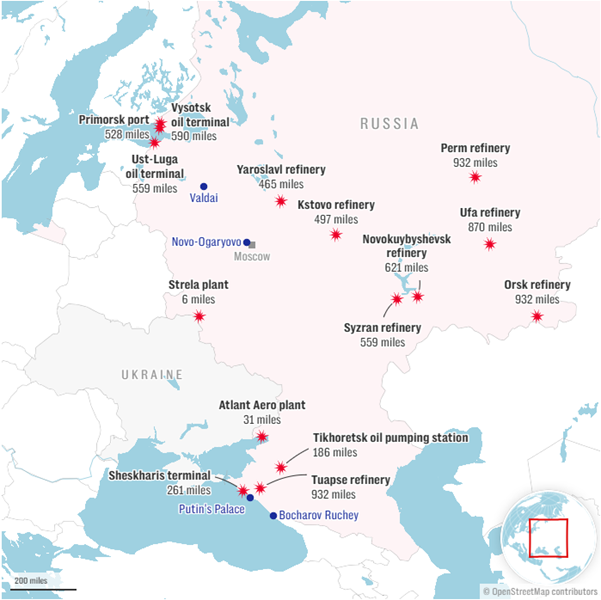
The war in Ukraine is supposedly close to a conclusion as the three-day ceasefire brokered by President Trump, apparently to allow Moscow to run its Victory-Day Parade uninhibited, comes to an end. Ukraine’s increasing ability to strike deep into Russia has become a problem for Putin and there are increasing indications of either paranoia or genuine domestic discontent.
Blue spots represent Putin’s residences and red starbursts represent Ukraine deep strikes:
With the Mid-term elections closing in, Trump’s clock is ticking, thus we expect geopolitical volatility to increase imminently.
Where are markets up to?
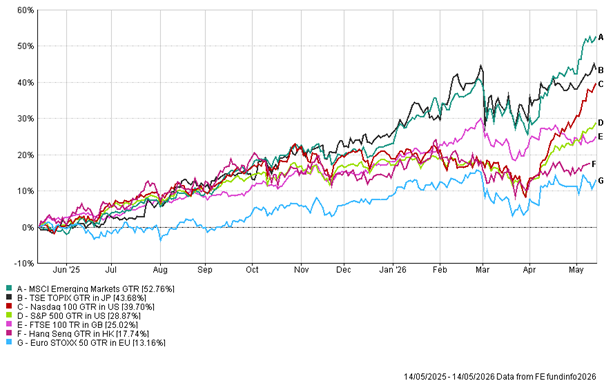
The rolling 12 month % cumulative returns in local currency from various indices is shown in the following chart:
Where are the portfolios up to?
The portfolio performance, net of fees, to close of business on Thursday is as follows:

As ever, if you would like to discuss any aspect of your portfolio, please do not hesitate to contact us on service@blythefinancial.com.